The History of Feather Art and Fly Tying
Feathers have been used in art, decoration and craftsmanship for thousands of years — a brief history of feather work and fly tying.
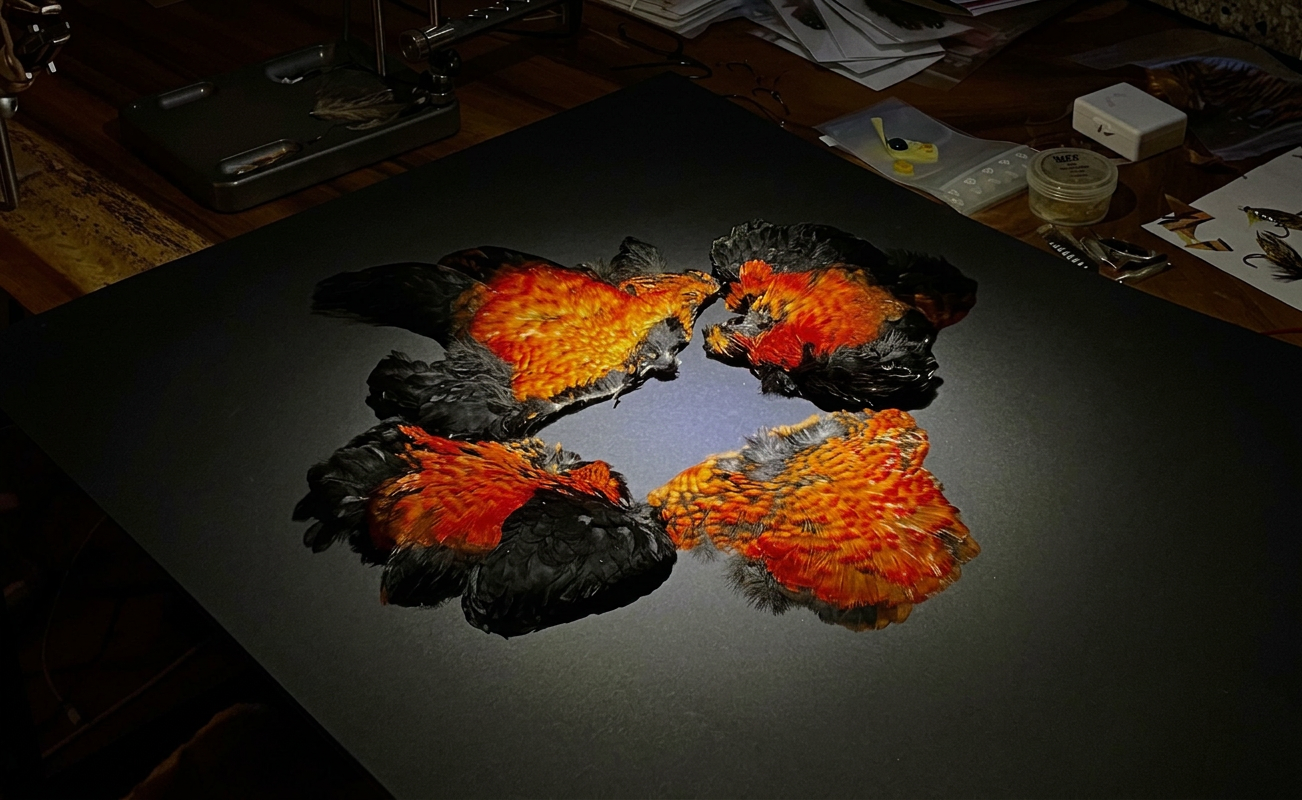
Feathers have been used in art, decoration, and craftsmanship for thousands of years. Across many cultures, feathers have symbolized status, spirituality, beauty, and connection to the natural world.
Feathers in Art and Ceremony
Feather art has appeared in ceremonial clothing, traditional regalia, decorative objects, and fine artistic works. Skilled artisans have long appreciated the remarkable variety of colors, textures, and patterns found in bird plumage.
The Origins of Fly Tying
Fly tying developed as a specialized craft designed to imitate insects and other prey species that attract fish. Historical records indicate that artificial flies have been used for centuries, with increasingly sophisticated techniques emerging over time.
Why Natural Feathers Still Matter
As fly tying evolved, natural feathers became some of the most important materials available to anglers. Many classic salmon and trout fly patterns rely on carefully selected feathers to create lifelike movement and visual appeal.
Today, both feather collecting and fly tying continue to attract enthusiasts who appreciate the beauty, craftsmanship, and historical significance of these remarkable natural materials.